
Why Mobile Coffee Carts and Food Trucks Need Reliable Temperature Monitoring
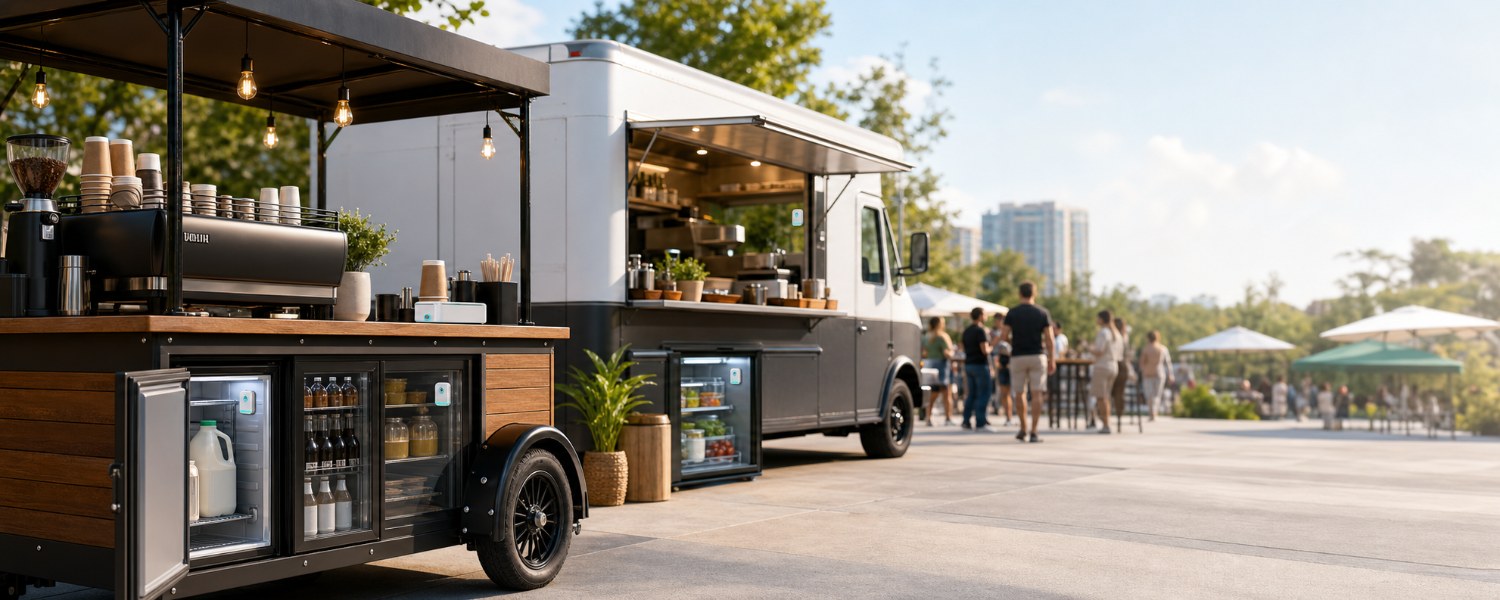
Mobile coffee carts and food trucks are built for flexibility: they can serve customers at weddings, campuses, office parks, farmers markets, community events, and private parties. But behind every great drink or meal is a simple operational challenge that is easy to overlook: keeping perishable ingredients at the right temperature while the business is constantly on the move.
For a home user, temperature monitoring is often about peace of mind. For a mobile food business, it is about protecting inventory, avoiding service interruptions, and maintaining food safety records.
Why temperature matters more in a mobile setup
A mobile coffee cart or food truck may rely on milk, plant-based milk, cold brew, cream, syrups, frozen items, prepared ingredients, and other temperature-sensitive supplies. These items often sit in compact refrigerators, under-counter coolers, freezers, ice chests, or prep fridges inside a vehicle or trailer.
Unlike a home kitchen, the operating environment changes throughout the day. The unit may be parked outdoors, connected to temporary power, moved between locations, cleaned after service, and stored overnight. Each of those transitions creates opportunities for temperature problems.
- Power interruptions: temporary shore power, generators, batteries, or outlets can fail or be unplugged.
- Door openings: repeated access during rush periods can push cooler temperatures above the safe range.
- Weak or changing networks: mobile businesses may switch between Wi-Fi, hotspots, and poor event-site connectivity.
- Hot weather and direct sun: small refrigerators inside trailers can work harder than expected.
- Overnight storage: inventory may remain in the vehicle after service, when nobody is nearby to notice a problem.
How mobile food businesses differ from home users
Home users usually monitor one or two refrigerators to avoid spoiled groceries. Mobile food businesses face a different set of risks. A single temperature failure can mean discarded inventory, delayed service, lost revenue, or uncomfortable conversations during a health inspection.
That is why the value of monitoring is different. It is not only about receiving an alert when a freezer is too warm. It is about proving that ingredients were stored properly, responding quickly when equipment fails, and reducing the chance that a small issue becomes a business disruption.
A practical monitoring setup for a coffee cart
A simple starting point for many mobile coffee operations is a small wireless monitoring kit:
- 1 hub to connect sensors and send alerts
- 2–4 temperature sensors placed in the most important storage areas
Suggested sensor locations may include:
- Milk cooler: dairy and plant-based milk are often the highest-risk ingredients.
- Prep fridge or under-counter refrigerator: monitor daily-use ingredients during service.
- Freezer: useful for frozen products, ice cream, pastries, or backup inventory.
- Cold brew or ambient storage area: depending on the workflow, an extra sensor can monitor a secondary cooler or the trailer environment.
With this setup, operators can receive alerts when temperatures exceed the expected range, review temperature history, and check storage conditions before, during, and after an event.
What to look for in a monitoring system
For mobile food businesses, the best system is not just accurate—it must be easy to use in the real world. Important features include:
- Real-time alerts for temperature excursions
- Historical records that can be reviewed or exported
- Simple installation without complicated wiring
- Flexible connectivity for changing operating locations
- Multiple sensor support for coolers, freezers, and prep areas
MOCREO wireless temperature monitoring helps small food businesses keep an eye on critical storage points without adding a complicated daily task. For a mobile coffee cart, food truck, or event-based catering business, it can turn temperature monitoring from a manual checklist into an automated safety net.
Protect inventory, service, and customer trust
Mobile food businesses work hard to create a great customer experience. A cooler failure should not be the reason a service day is delayed or inventory is thrown away. By monitoring key refrigeration points and receiving alerts early, operators can protect ingredients, reduce waste, and operate with more confidence.
If you run a coffee cart, food truck, pop-up beverage business, or mobile catering operation, consider starting with a hub and a few sensors in your most critical cold storage areas. It is a small setup that can help prevent a much bigger problem.