
Cold Storage Temperature Monitoring Guide: How Food Businesses Monitor Freezers, Coolers, and Reefers Automatically
Practical guide · Real food-business workflows
Cold storage rarely means one refrigerator. It can include reefer containers, freezers, coolers, production rooms, and frozen-food manufacturing areas—each creating a potential monitoring blind spot.
This guide uses feedback from three food businesses to show how multi-point monitoring, app access, temperature records, and notifications can improve daily visibility.
Why Cold Storage Temperature Monitoring Matters
Restaurants, farms, food processors, and cold chain operators all depend on stable cold storage conditions. Fresh produce needs to stay cool enough to maintain quality. Frozen products need consistent freezer performance. Kitchen production areas often need separate monitoring for ingredients, prepared foods, and backup storage.
The challenge is that cold storage equipment is often distributed across different rooms, buildings, or containers. A single freezer may be easy to check. A full operation with multiple freezers, coolers, and reefers is different. Manual checks take time, records may be incomplete, and equipment issues may not be noticed quickly enough.
Common Problems With Manual Cold Storage Checks
Many food businesses start with a simple process: a team member checks the freezer or cooler, writes down the temperature, and repeats the task later. This can work for a small operation, but it becomes harder as storage locations increase.
1. Manual checks leave long blind spots
O’Tasty Foods Inc., a Southern California manufacturer of frozen gyozas and char-siu baos, previously checked temperatures every two to four hours and recorded them on paper. The team reported that deviations could be missed for days or refrigeration issues might not be noticed until it was too late.
2. One monitor cannot cover a distributed operation
Barrie Hill Farms previously used a cellular monitor on one freezer, but it could not monitor more than one device. Other areas still depended on manual checks, which the customer said were often not completed.
3. Difficult systems and false alarms reduce confidence
Berry Hill Foods relied on a small number of thermometers connected to an older Honeywell system. According to the customer, it was difficult to manage and adjust, generated many false alarms, and did not provide complete visibility across freezers, fridges, and rooms.
What Should Food Businesses Monitor?
A cold storage monitoring plan should start by listing every storage area where a temperature issue could affect product quality, freshness, or operational continuity. Common locations include:
- freezers for frozen products;
- coolers for fresh fruits, vegetables, dairy, beverages, or ingredients;
- walk-in coolers in restaurants or commercial kitchens;
- shipping containers with installed reefers;
- kitchen production storage areas;
- backup cold storage areas used during peak seasons or high-volume production.
Once these points are identified, the next step is to decide which areas need automatic notifications, history records, or regular review. The goal is not to create more work. The goal is to reduce blind spots.
Three Cold-Storage Workflows, Three Practical Benefits
Barrie Hill Farms
Uses MOCREO across reefer containers, freezers, coolers, and kitchen storage. Notifications replaced a workflow combining one cellular monitor with frequently missed manual checks.
O’Tasty Foods Inc.
Highlights constant monitoring, 24-hour app access to temperature records, and alerts during spikes related to production, weather, or equipment malfunctions.
Berry Hill Foods
Monitors freezers, fridges, and rooms. The customer says instant app monitoring helps catch developing problems, especially during hotter days.
Before and After: How Automatic Monitoring Changes the Workflow
Before: manual or single-point checks
- One monitor covers only one freezer.
- Staff must remember scheduled checks.
- Problems can remain unnoticed between rounds.
- Records depend on paper or manual routines.
After: connected monitoring workflow
- Multiple freezers, coolers, or reefers can be planned as one system.
- Notifications draw attention to temperature events.
- Teams gain quicker remote visibility.
- App-based records support regular review.
What These Customer Experiences Have in Common
The three operations store different products, but the workflow problem is consistent: periodic checks only show the temperature at the moment someone looks, and a single monitor cannot represent a multi-location operation.
The transferable lesson for restaurants, central kitchens, farms, and food processors is to map every critical storage point first, then select sensors, external probes where needed, hubs, records, and notifications as one monitoring workflow. The exact configuration depends on the site—not on a one-size-fits-all product list.
What to Look for in a Cold Storage Temperature Monitoring System
When evaluating a temperature monitoring solution for food storage, businesses should focus on practical workflow requirements rather than only hardware specifications.
Multi-point monitoring
The system should fit the number of freezers, coolers, reefers, and storage rooms that need coverage. If a business is growing, it should consider whether the setup can scale beyond one device.
Notifications for temperature issues
Notifications are one of the most important features for cold storage operations. They help teams respond when a freezer, cooler, or reefer needs attention.
Easy daily review
Managers should be able to understand the status of storage areas without walking to every location. Remote visibility can be especially useful when storage areas are spread across a facility or property.
History records and export options
O’Tasty Foods specifically highlighted 24-hour access to temperature records through the app. For other food businesses, history records can also support internal reviews and process improvement. Exact retention and export capabilities should be confirmed for the selected MOCREO setup.
Reliable alerts, not alert fatigue
The system should help teams identify real issues without creating unnecessary noise. Reliable notifications help staff maintain confidence in the monitoring workflow.
Recommended MOCREO Products for Cold Storage Scenarios
Choose a setup by starting with the site—not with a specification sheet. Count the refrigerators, freezers, rooms, and reefer containers; note how far apart they are; and identify where an external probe is needed to reach the actual cold space. The sensor, probe cable, hub, records, and notifications should work as one monitoring workflow.
For compact refrigerator or freezer setups: consider an add-on sensor with an external probe and a compatible hub. For larger or distributed sites: consider a longer-range hub-and-sensor system that can cover separated storage areas. The two examples below illustrate these different use cases without prescribing one configuration for every site.
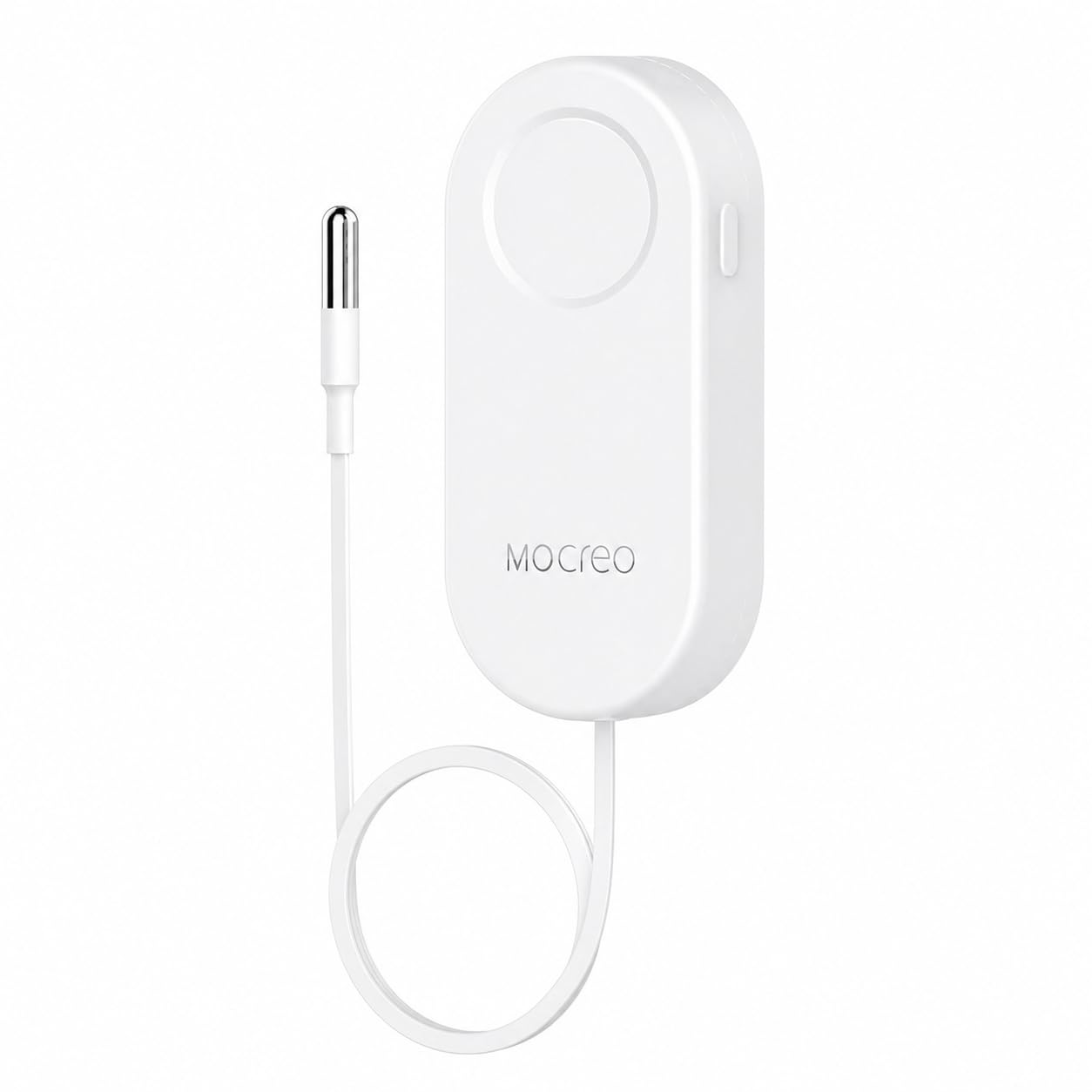
MS2 Refrigerator Freezer Thermometer Sensor
Best fit for adding one more refrigerator or freezer monitoring point to an existing MOCREO system. The current product page describes MS2 as an add-on cold-storage sensor with an ultra-flat external probe and notes that a compatible MOCREO Hub is required.
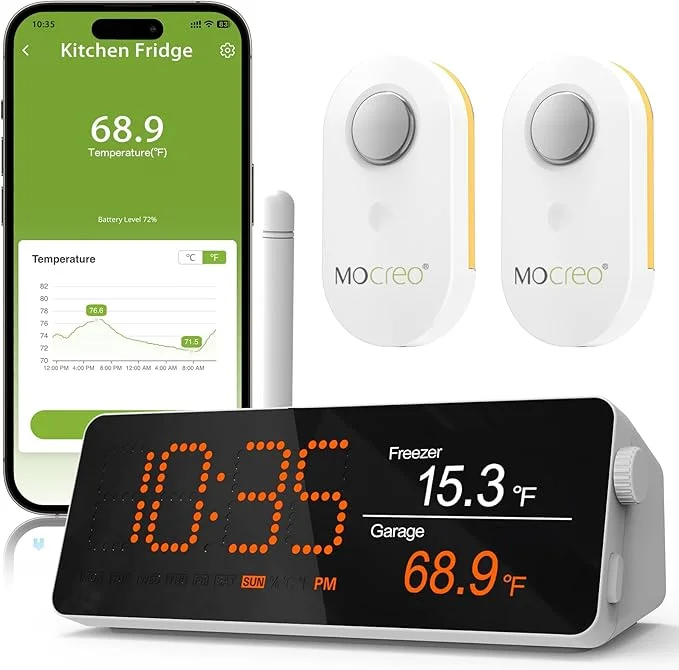
LoRa Temperature Sensor LS1 + H5-Pro Hub Starter Kit
Best fit for distributed food storage areas where long-distance wireless deployment is important, such as larger facilities, storage rooms, or separated cooler/freezer locations.
Explore the recommended cold-storage monitoring setup →
Product availability, compatibility, and the final sensor/probe/hub configuration should be confirmed for each site before purchase.
FAQ: Cold Storage Temperature Monitoring
What is cold storage temperature monitoring?
Cold storage temperature monitoring is the process of tracking temperature conditions in freezers, coolers, reefers, walk-in coolers, and other food storage areas. Automatic systems help reduce dependence on manual checks and notify teams when temperature attention is needed.
Why should food businesses move beyond manual temperature checks?
Manual checks can be missed during busy shifts, deliveries, production runs, or staff changes. Automatic monitoring helps teams see issues earlier and maintain better visibility across multiple cold storage locations.
Can one temperature monitor cover an entire food storage operation?
Usually not. One monitor may work for one freezer, but food businesses often need multiple monitoring points for freezers, coolers, reefers, kitchen storage, and backup storage areas.
Does automatic monitoring guarantee food safety compliance?
No. Temperature monitoring can support food safety workflows, recordkeeping, and inspection preparation, but it does not replace required food safety procedures or guarantee compliance.
Conclusion
Cold storage temperature monitoring is becoming more important as food businesses manage more storage areas, more product types, and tighter operational expectations. Manual checks alone can leave blind spots, especially when teams are busy or equipment is spread across multiple locations.
By using automatic temperature monitoring and notifications, businesses like Barrie Hill Farms can move from single-point monitoring and missed manual checks to a more scalable cold storage workflow. The same approach can help restaurants, commercial kitchens, food processors, farms, and cold chain operators improve visibility across freezers, coolers, reefers, and food storage areas.