
Where Should You Place a Temperature Probe in a Commercial Refrigerator?
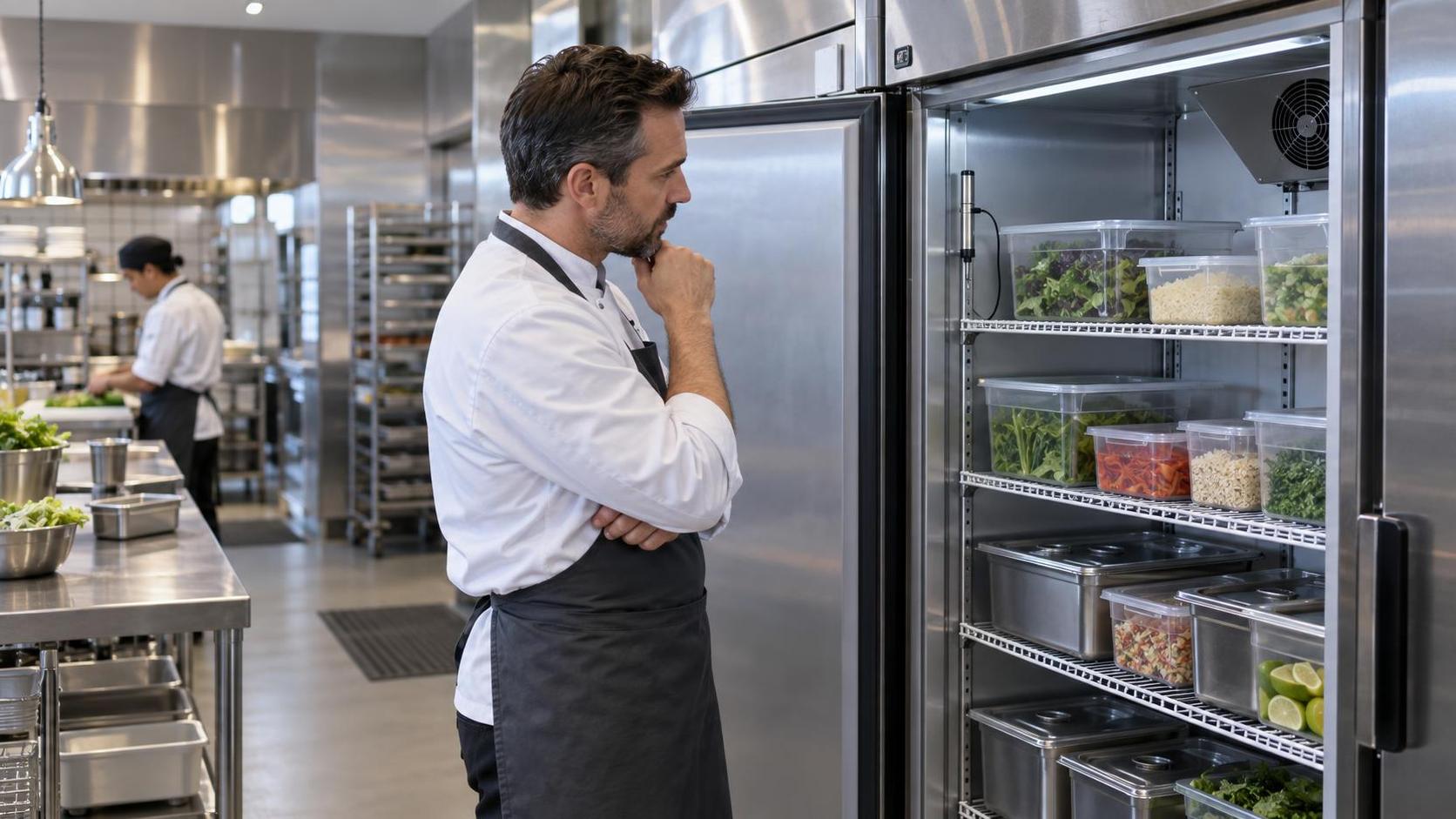
Place the temperature probe at food-storage height in the warmest part of your commercial refrigerator’s storage area. Keep it out of direct cold airflow and away from interior surfaces. Confirm the location with the refrigerator loaded and operating normally before securing the probe.
A probe near the cold-air outlet can show a reassuring reading while food elsewhere is getting warmer. A probe directly in the door draft may record brief spikes whenever staff open the refrigerator. The aim is to monitor the warmest storage area, not simply find the spot with the fewest alerts.
Use readings taken during normal operation to identify the warmest food-storage area at shelf height. Do not assume the front or middle is best for every cabinet. Check that the probe measures the storage area rather than a direct air stream or an interior surface before mounting it permanently.
Choose a Warm, Representative Area
The goal is not to find the coldest or most stable-looking number. You want a reading that changes when the food-storage area starts to warm.
This follows the placement principle in FDA Food Code 2022 §4-204.112, which places the sensor of a temperature-measuring device in the warmest part of a mechanically refrigerated food-storage unit. A sensor in the coldest spot may not show what is happening where food is actually stored.
Every cabinet is different. Shelf layout, food volume, fan location, door use, and defrost cycles all affect airflow. That is why the final position should be based on your refrigerator during a normal service day—not an empty cabinet after closing.
Three Places That Commonly Give Misleading Readings
Compare candidate locations at food-storage height with the refrigerator loaded as usual. Choose the location that represents the warmest storage area during normal use, rather than a fixed distance from the door. If the refrigerator has separate zones or is packed unevenly, one probe may not represent the whole cabinet.
Test the Position During a Normal Shift
Before fixing the probe in place, compare candidate locations across normal operating conditions, including deliveries, meal service, restocking, and defrost. Note which storage area runs warmest, how readings change when the door opens, and how they recover afterward. Use those patterns to distinguish brief fluctuations from sustained warming; do not choose a location simply because its readings look steadier.
If the temperature drops sharply whenever the fan runs, check whether the probe is directly in the cold-air stream and reassess its position. If door openings repeatedly trigger alerts, review the probe location, normal recovery pattern, and alert settings together. Do not move the probe away from a confirmed warmest storage area just to silence alerts. If one side of a large cabinet is consistently warmer, consider a second monitoring point.
Once the position looks right, secure the cable away from hinges and sharp edges. Check that the door gasket still closes evenly and that containers or cleaning work will not move the probe.
Air Temperature Is an Early Warning, Not a Food Reading
A probe hanging in the cabinet measures the air around it. It can show that the refrigerator is warming, running longer than usual, or failing to recover after the door closes. It does not measure the center of the food. Use a suitable calibrated food thermometer whenever your procedure or local rules require a product-temperature check.
Turn Probe Placement into a Two-Refrigerator Monitoring Setup
MS2 uses Bluetooth LE to communicate with a compatible MOCREO Hub. Keep the sensor body outside the metal cabinet and place its 0.9 mm ultra-flat external probe inside. Route the cable through the door seal, then check that the door closes properly and the sensor communicates with the Hub.
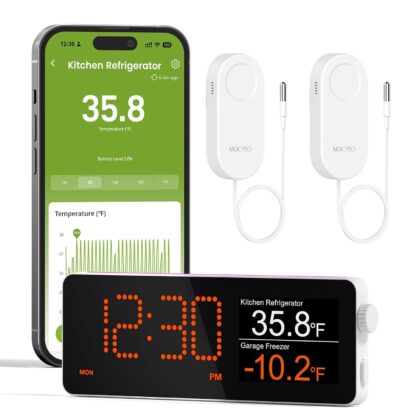 1 HUB + 2 SENSORS
Monitor Two Refrigerators from One Kit
H5Lite-MS2D includes one H5Lite screen Hub and two MS2 sensors for 24/7 remote refrigerator and freezer temperature monitoring through the MOCREO Smart App. View both sensor temperatures on the Hub screen and receive App, Email, and Hub alerts when readings go outside your preset range. Remote monitoring and cloud alerts require the sensors to communicate with an internet-connected Hub. This setup does not record temperature data during a power outage or recover outage-period readings afterward.
- Read both units on one screen hub
- Receive app, email and hub alerts
- Keep sensor bodies outside metal cabinets
After installation, compare the probe with a suitable reference thermometer and test the alert without warming stored food. You can temporarily adjust the alert threshold or warm only the probe, then restore the normal threshold and position. For a fuller response process, see How Restaurants Automate Fridge Temperature Monitoring—from Reading to Response.
Recheck the Probe When the Refrigerator Changes
Move or retest the probe after changing the shelf layout, loading pattern, door gasket, or refrigeration equipment. The right position is the one that gives your team an early, believable warning—before a small cooling problem turns into food loss.
Once one refrigerator is giving reliable readings, you can apply the same approach across the rest of the kitchen. The next step is to decide which refrigerators, freezers, or walk-in units need continuous monitoring, which temperature changes require action, and who should respond after closing.
Plan Monitoring Across the Rest of Your Kitchen
Use the restaurant guide to map your cold-storage equipment, alert rules, and after-hours response process.
View the Restaurant Monitoring Guide →Note: FDA Food Code guidance is a model used by regulatory authorities. Local requirements and your restaurant’s food-safety procedures take precedence. An add-on wireless probe does not replace required integral thermometers or direct food-temperature checks.